Applying Instrumental Neutron Activation Analysis (INAA) to Study the Increasing Toxicity of Heavy Metals in Water Resources Due to the Continuous Megadrought and Population Growth in Clark County
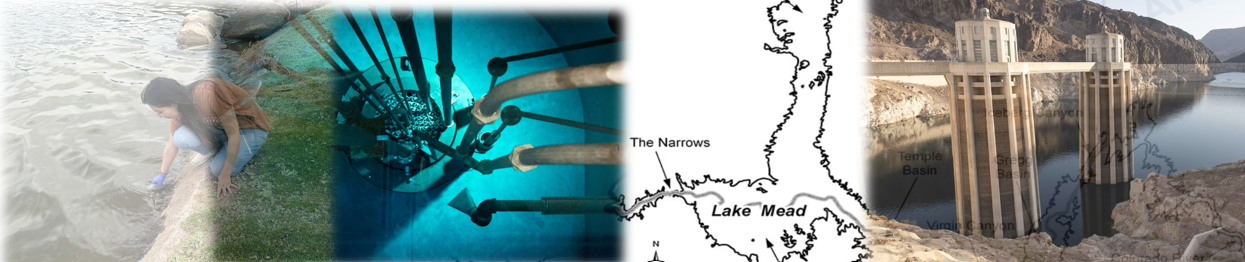
Water resources and their quality are critical to human life and the ecological system. In southern Nevada, nearly 90% of water comes from Lake Mead, and the other 10% comes from groundwater pumped out from local wells. In the recent decade, the severe megadrought in the southwest continued, and the population in Las Vegas valley kept on growing. Climate change and population growth (dumping more solid waste containing heavy metals) alter groundwater chemistry, and concentrations of heavy metals conceivably increase in Lake Mead and surrounding wells in the valley because of water level recedes. This challenge has evolved into a crucial issue facing Clark County. The traditional method of water monitoring only focuses on rudimentary tests on a few heavy metals, such as mercury, lead, etc. However, the accumulative effects of other heavy metals, such as As, Zn, Cr, Cd, Cu, Fe, Mg, Ni, Sn, Th, Tl, U, etc., can not be simply ignored, especially as Lake Mead moves toward the direction of “dead pool” in the megadrought. The accumulative effects of heavy metals in water resources also can potentially damage youth’s cognitive capacity at their early stage and cause early. Experimental and epidemiological evidence has shown the associations between heavy metals on Alzheimer’s disease and related dementias.
To resolve this looming challenge, we propose to study and monitor the toxicity of heavy metals in water with the most sensitive (up to ppb level) multi-element radioanalytical technique — Instrumental Neutron Activation Analysis (INAA). After irradiation of the samples with thermal and ep neutrons, qualitative and quantitative information about the different isotopes (~ 40 elements) can be obtained from the decay spectra recorded by gamma-ray spectrometers. With the versatile INAA technique, we will aim for the following objectives:
(1) Applying INAA and gamma spectroscopy to identify heavy metals in water resources in Clark County and calculate their concentrations of toxicity due to the continuous megadrought and population growth.
(2) Investigating the relationship of the isotopes in groundwater in the down-gradient from the Nevada Test Site to ensure no radiological contamination (e.g., Am-241, Cs-137, Sr-90, H-3, etc.) from nuclear fallout can enter the water resources of the Las Vegas valley.
(3) Investigating the seasonal variation of heavy metal concentration in Lake Mead and establishing the baseline values for each toxic metal in various seasons. We will establish a monitoring network for heavy metals in the water resources of Clark County, with all the data will be shared with the general public.
(4) After the toxicity analysis, low-cost test/remediation kits will be designed and implemented to treat heavy metals in water and rural wells.
(5) Data collected will be a guide and future reference for water pollution toxicology and environmental monitoring in Clark County. The results will educate the general public about the environmental impact of climate change and human behavior on water quality. Pertinent information will be disseminated to residents through the Extension.
Applying Instrumental Neutron Activation Analysis (INAA) to the Study of Heavy Metals in Spanish Moss (Tillandsia Usneoides) for Biomonitoring Air Pollution in the Lowcountry of South Carolina
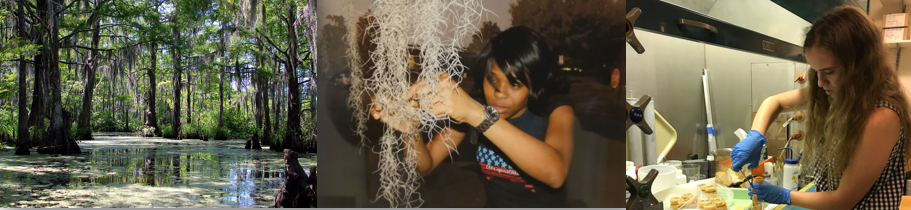
Spanish Moss (Tillandsia usneoides) is an epiphyte that grows upon larger trees in tropical and subtropical climates. It is a common plant in the lowcountry region of South Carolina. It absorbs nutrients and water through its leaves from the air and rainfall, which makes it ideal for serving as a bio-indicator of local air pollution. Similar projects and analytical methods have been applied in other places (e.g., Romania, Argentina, etc.), but none of them is conducted in South Carolina.
The PI’s research group proposes to study the samples of Spanish Moss with a sensitive radioanalytical method—instrumental neutron activation analysis (INAA). INAA has been a versatile tool in multi-element analysis for more than half a century, but it was not widely applied to studying environmental toxicology in South Carolina. After irradiation of the samples with nuclear reactors, qualitative and quantitative information of the elements can be obtained from the decay spectra recorded by gamma-ray spectrometers. By analyzing samples of Spanish Moss with INAA, it is possible to determine the level of heavy metal elements with high accuracy and extreme sensitivity, and establish a relationship between the concentrations of trace elements, especially heavy metals in the Spanish moss and the air pollution in the lowcountry of South Carolina.
This study will be the pilot stage of a long-term project. It will start with the lowcountry of South Carolina, particularly in Berkely, Charleston, Dorchester, and Orangeburg counties. The Spanish Moss near the industry and heavy traffic sites will be given special attention. Hundreds of Spanish Moss samples will be collected from these counties. All samples will be irradiated by thermal and epithermal neutrons from PULSTAR reactor. Both short-lived isotopes and long-lived isotope spectra will be measured after irradiation. Our focus will be on concentrations of heavy metals, such as Cd, Zn, Hg, As, Pb, etc. In order to deal with the extensive data of gamma-ray spectra, an online spectra analysis program (Nuclear Activation Analysis System: NAAS) will be applied. Neutron flux of the PULSTAR reactor will be simulated with MCNPX to mimic the real situation in neutron irradiation.
This study will support the mission of natural resource management programs in 1890 research and train highly-skilled, competent and well-prepared students in the fields of Nuclear Engineering and radiochemistry. The immediate outcome of the project is a detailed survey map of heave metal elements in Spanish Moss in the lowcountry of South Carolina, which will give the public a better understanding of the environmental impact of human activities on air pollution toxicology. Pertinent information from the research will be disseminated to local farmers through 1890 extension, particularly to those classified as small limited resource farmers. This project will contribute to enhancing the environmental monitoring, environmental toxicology, air quality of plantations, and improve the economic vitality of rural communities in South Carolina.
Applying Nuclear Activation Analysis to the Study of Toxic Elements in Cotton Seeds
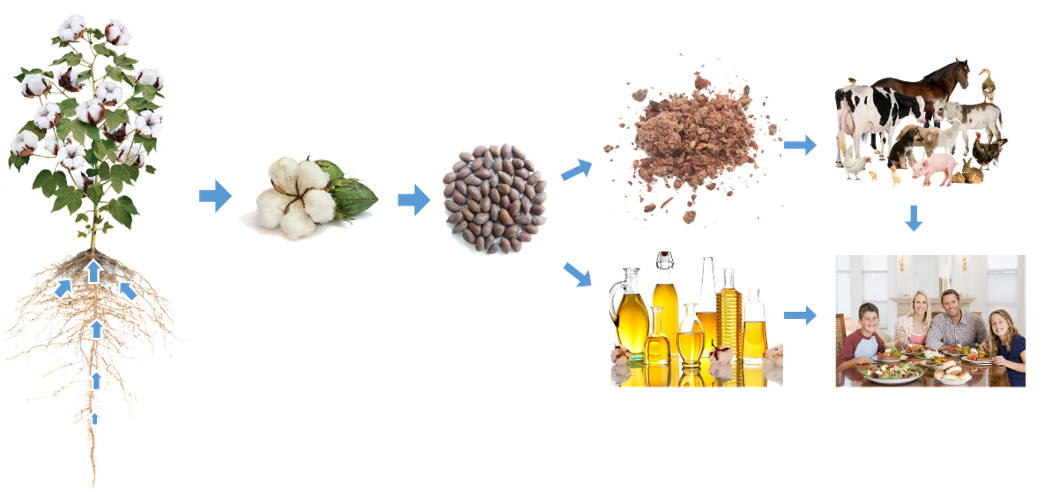
Cotton has been an important cash crop in the Palmetto State since revolutionary times to current day. Its seeds are about 15% of the value of the crop and used widely in making oil and feeding animals. Throughout the growing season, cotton assimilates numerous trace elements from the soil, including the toxic ones. Some of these trace elements are accumulated or enriched in cotton seeds.
Nuclear activation analysis has been a versatile tool in multi-elemental analysis for more than half a century. After irradiation of the samples, qualitative and quantitative information of the elements can be obtained from the decay spectra recorded by gamma-ray spectrometers. By analyzing samples of cotton seeds and the corresponding local soil with nuclear activation analysis, it is possible to determine the level of trace elements with high accuracy and extreme sensitivity and establish a relationship between the number of toxic trace elements in the cotton seeds and the level of heavy metal contamination in the local soil.
Hypothesis:
(1) Cotton extract numerous trace elements from the local soil, including toxic ones (Arsenic, Cadmium, Lead, Mercury, etc.). These toxic trace elements are accumulated/enriched in seeds.
(2) The amount of toxic elements in cotton seeds is an indicator of the heavy metal contamination of the local soil where the cotton grows.
Goal/Objectives:
(1) Analyzing samples of cotton seeds and their corresponding local soil with nuclear activation analysis;
(2) Investigate the relationship of toxic elemental level in the crop with heavy metal contamination of local soil.
Outcomes:
(1) A detailed survey map of toxic elements level in cotton seeds in South Carolina;
(2) A detailed survey map of toxic elements level in cotton farm soil in South Carolina;
(3) A survey map of the toxic elements level in cotton seeds in the United States/World.
Potential Impact:
(1) One of the first attempts to study crops with nuclear activation analysis;
(2) Data collected can be used for future references;
(3) Demonstrate the environmental impact of human behavior on traditional cash crops and food industry.
Research Methods:
(1) Sample Collection and Preparation: cotton seeds samples are collected in the South Carolina/United States/World; soil samples are collected in cotton farms in South Carolina.
(2) Irradiation and Measurement: irradiations and measurements are conducted at the PULSTAR Reactor at North Carolina State University.
(3) Data Analysis: peak fitting and spectra analysis are performed by computer clusters at the ARSL. Some statistical models (Linear discriminant analysis, principal components analysis, etc.) are adopted in the data processing.
